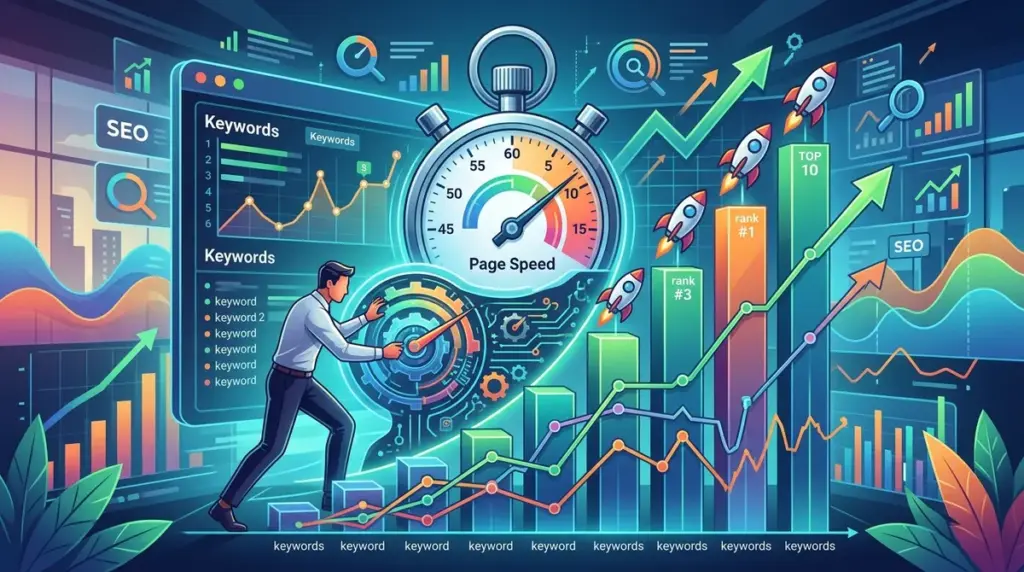
In the current search landscape, page speed is no longer a peripheral technical concern; it is a fundamental pillar of search engine optimization that directly dictates keyword visibility. When a site’s performance degrades, the impact on rankings is rarely a sudden disappearance from the SERPs. Instead, it manifests as a slow erosion of positions, particularly for high-competition terms where Google uses performance metrics as a decisive tie-breaker between otherwise equal pages. For SEO professionals and site owners, understanding the causal link between load times and keyword fluctuations is essential for protecting organic traffic and justifying technical overhead.
The Mechanics of the Speed-Ranking Correlation
Google’s integration of Core Web Vitals (CWV) into its ranking algorithm established a quantifiable threshold for what constitutes a "good" user experience. These metrics—Largest Contentful Paint (LCP), Interaction to Next Paint (INP), and Cumulative Layout Shift (CLS)—are not just diagnostic tools; they are active signals used to evaluate a page's eligibility for top-tier rankings. When your LCP exceeds the 2.5-second mark or your CLS indicates significant visual instability, your page may be demoted in favor of faster competitors, even if your backlink profile and content depth are superior.
Key Metric Focus: LCP is often the most volatile metric affecting rankings. It measures how long it takes for the primary content of a page to become visible. If a heavy image or an unoptimized script delays this process, search engines perceive the page as less valuable to the user, leading to a downward shift in keyword positions for that specific URL.
Impact on Crawl Budget and Indexing Frequency
Beyond the direct ranking signal, page speed influences how efficiently search engine bots interact with your site. Every website is allocated a "crawl budget"—the number of pages a bot will crawl during a single session. This budget is heavily influenced by server response times (Time to First Byte, or TTFB).
- Reduced Crawl Depth: If your server takes 500ms to respond instead of 100ms, search bots will crawl fewer pages in the same timeframe. This can lead to new content taking longer to index and existing pages failing to update in the SERPs after optimizations.
- Stale Content Issues: When a site is slow, bots visit less frequently. If your keyword positions rely on timely updates (such as price changes or news), a delay in re-indexing can lead to a loss of relevance and a subsequent drop in rankings.
- Orphaned Pages: Slow-loading internal links can cause bots to "give up" on a crawl path, leaving deeper pages unindexed and unable to rank for long-tail keywords.
User Experience Metrics and Indirect Ranking Shifts
While Google’s algorithm uses direct speed signals, it also monitors user behavior as a secondary validation of quality. A slow site triggers negative behavioral signals that search engines interpret as a lack of relevance or utility. This creates a feedback loop where technical performance issues eventually manifest as "content quality" problems in the eyes of the algorithm.
The Bounce Rate and Dwell Time Connection
There is a direct mathematical correlation between load time and bounce rate. Industry data suggests that a delay of just three seconds can increase the probability of a bounce by over 30%. When users click a search result and immediately return to the SERP because the page is loading too slowly—a phenomenon known as "pogo-sticking"—it signals to Google that the result did not satisfy the user's intent. Over time, this high bounce rate and low dwell time will cause a page to slip from the top positions, regardless of how well-optimized the on-page SEO might be.
Warning: Do not rely solely on "lab data" from synthetic testing tools. Google uses "field data" (Chrome User Experience Report) to determine rankings. A site that looks fast in a controlled test but fails on slow mobile connections in the real world will still suffer ranking penalties.
Identifying Ranking Drops Caused by Performance Regressions
When you notice a broad decline in keyword positions, it is critical to cross-reference your ranking data with performance logs. A sudden drop across multiple keywords often points to a site-wide technical regression rather than a content-specific issue. Common culprits include the deployment of unoptimized third-party scripts, the removal of a Content Delivery Network (CDN), or a server configuration change that increased TTFB.
Diagnostic Step: Check the "Experience" section in Google Search Console. If the date of a ranking decline aligns with a spike in "Failing" URLs in the Core Web Vitals report, you have found your primary cause. Unlike content updates, which may take weeks to show results, fixing speed issues can often lead to a relatively rapid recovery in keyword positions as bots re-crawl the optimized pages and detect the improved response times.
Building a Performance-First SEO Workflow
To maintain stable keyword positions, performance must be treated as a continuous monitoring task rather than a one-time fix. High-ranking pages are targets for competitors; if a competitor optimizes their speed while yours remains static, you are effectively losing ground. A proactive workflow involves setting performance budgets for new features and ensuring that every design change is vetted for its impact on LCP and CLS.
Focus on "quick wins" that have the highest impact on rankings: implement lazy loading for images, minify CSS and JavaScript, and use modern image formats like WebP or AVIF. More importantly, ensure your hosting infrastructure is capable of handling traffic spikes without increasing latency. In a competitive niche, the difference between position one and position four is often measured in milliseconds.
Frequently Asked Questions
How long does it take for rankings to improve after fixing page speed?
Rankings typically do not update instantly. Once speed improvements are live, you must wait for search engines to re-crawl the affected pages. Depending on your site's crawl frequency, you can expect to see keyword position shifts within two to four weeks as the field data in the Chrome User Experience Report updates. Tracking these keyword position shifts can help you validate technical SEO fixes and confirm their impact.
Does page speed affect desktop and mobile rankings differently?
Yes. Google uses mobile-first indexing, meaning the mobile version of your site is the primary version used for ranking. Since mobile devices often operate on slower processors and less stable networks, speed issues are magnified on mobile. A site may rank well on desktop but struggle on mobile if its mobile performance metrics are poor.
Is there a "perfect" speed score for SEO?
There is no "perfect" score, but there is a "Good" threshold defined by Core Web Vitals. Once your page enters the "Good" range (e.g., LCP under 2.5s), the ranking benefits diminish. The goal is to be faster than your direct competitors rather than chasing a theoretical 100/100 score at the expense of necessary site functionality.
Can high page speed compensate for poor content?
No. Page speed is a technical requirement and a tie-breaker, not a replacement for relevance. A lightning-fast page with thin, irrelevant content will not outrank a slower page that provides comprehensive, high-quality answers to a user's query. Speed ensures your content has the opportunity to rank; it does not guarantee it.