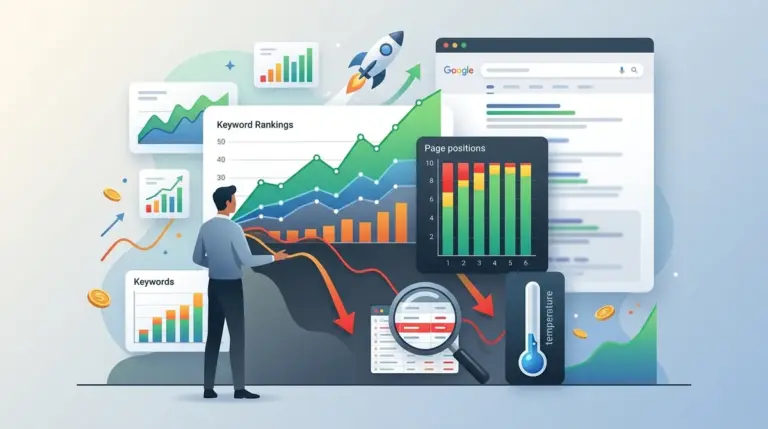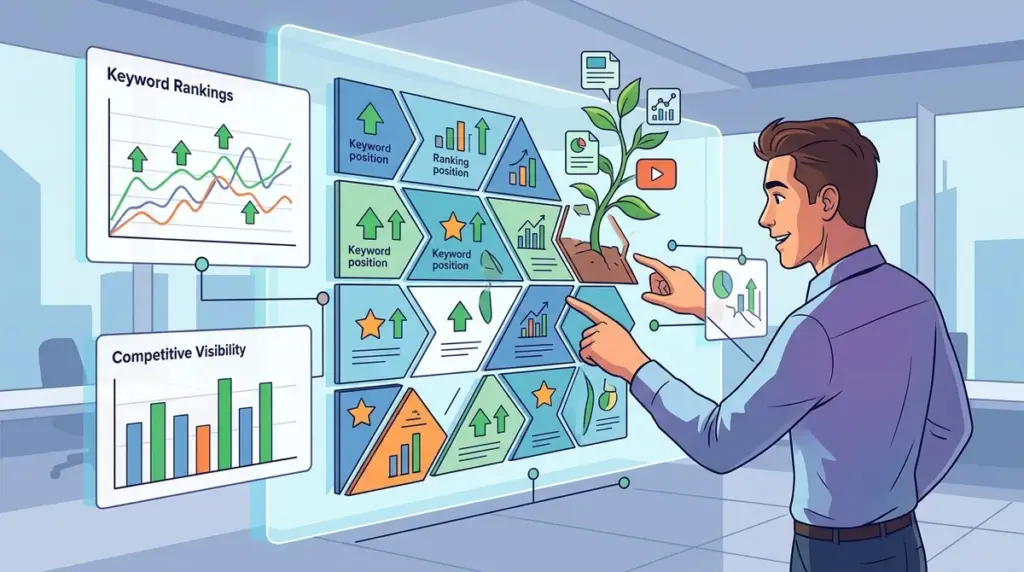
Rank tracking data is frequently treated as a scoreboard, a simple way to report on whether a site is winning or losing. For high-performance SEO teams, however, these metrics serve as a diagnostic tool for inventory management. Content gaps are not merely missing keywords; they are missed opportunities where your current content fails to meet the specific intent, format, or authority requirements of a search engine results page (SERP). Using rank tracking to identify these gaps allows you to move beyond generic keyword research and focus on high-probability wins based on existing data.
Identifying Striking Distance Keywords as Content Depth Gaps
The most immediate content gaps are found in your "striking distance" keywords—those ranking in positions 11 through 30. These rankings indicate that Google recognizes your page as relevant but considers the content insufficient to displace the top 10 results. This is a depth gap, not a topical gap.
To find these, filter your rank tracking data for keywords with high search volume where your URL is on the second or third page. Analyze the top three competitors for these terms. If they provide more granular data, better visual aids, or more recent statistics, your gap is one of quality and comprehensiveness. Best for: Rapidly increasing organic traffic without the overhead of creating entirely new URLs.
Mapping Competitor Dominance to Uncover Topical Voids
A sophisticated rank tracking setup includes monitoring your primary competitors alongside your own domains. By analyzing "Share of Voice" (SoV) reports, you can pinpoint specific categories or clusters where a competitor holds 60% or more of the top 10 positions while your domain holds zero. This indicates a structural gap in your content silo.
- Keyword Overlap Analysis: Export competitor rankings and cross-reference them with your own. Any high-volume term where a competitor ranks in the top 5 and you are unranked represents a hard content gap.
- Sub-topic Clusters: If a competitor ranks for "best enterprise CRM" and "CRM for manufacturing," but you only rank for the former, you have a vertical-specific gap.
- Feature Parity: Look for terms where competitors consistently trigger "People Also Ask" (PAA) boxes that your content does not address.
Pro Tip: Use tagging in your rank tracker to group keywords by product category or stage of the buyer’s journey (Awareness, Consideration, Decision). If your "Decision" tags show high rankings but your "Awareness" tags are non-existent, your content gap is at the top of the funnel, leading to a weak lead pipeline.
Extracting Intent Gaps from SERP Feature Volatility
Content gaps often manifest as a mismatch between your content format and what the SERP currently demands. If you rank in position 4 for a high-value term but the top 3 results are all video carousels or "How-to" schema blocks, your gap is a medium gap. You are providing text when the user intent—and the search engine—demands visual or structured data.
Monitor the SERP features for your tracked keywords. If a "Featured Snippet" is consistently awarded to a competitor, analyze the structure of their content. Are they using a <table>? A concise <ol> list? If your page lacks these elements, the gap isn't the topic itself, but the technical delivery of the information. Best for: Capturing "Position Zero" and increasing Click-Through Rate (CTR) for existing rankings.
Detecting Content Decay and Relevance Gaps
Rank tracking is the primary early warning system for content decay. When a page that historically held a top 3 position begins a slow, month-over-month slide into the bottom of page one, it signals a relevance gap. This happens when the information becomes dated, or when new competitors enter the market with more comprehensive data.
Set up automated alerts for any keyword that drops more than five positions in a 30-day period. This allows you to intervene before the page loses its historical authority. Often, these gaps can be closed by updating the "last modified" date with fresh statistics, new expert quotes, or updated product screenshots. Ignoring these signals allows competitors to solidify their lead, making it significantly more expensive to reclaim those positions later.
Using Search Volume Trends to Forecast Future Gaps
Content gaps aren't just about the present; they are about the future. By tracking search volume trends within your rank tracking interface, you can identify emerging topics before they become hyper-competitive. If you see a steady 10-15% month-over-month increase in volume for a "long-tail" term you aren't currently targeting, that is a nascent content gap.
Building content for these emerging gaps early allows you to build topical authority and earn backlinks while the competition is still focused on legacy keywords. This proactive approach ensures your content calendar is driven by market demand rather than editorial guesswork.
Executing a Content Gap Sprint
Once your rank tracking data has highlighted these gaps, the next step is execution. Do not attempt to fix every gap at once. Instead, categorize them into three buckets: Optimization (fixing striking distance keywords), Expansion (building new pages for competitor-dominated terms), and Transformation (adding video or structured data to meet SERP feature demands).
Prioritize the Optimization bucket first, as these pages already have some level of trust with search engines and will yield the fastest ROI. Move to Expansion only once your existing "striking distance" pages have been moved into the top 5. This methodical approach ensures that your SEO efforts are always tied to measurable ranking improvements and traffic growth.
Rank Tracking Content Gap FAQ
How often should I check for content gaps in my rank tracking data?
Perform a deep-dive content gap analysis monthly. While daily tracking is useful for monitoring volatility, content gaps require a broader view of trends to distinguish between temporary SERP fluctuations and genuine competitive shifts.
What is the difference between a keyword gap and a content gap?
A keyword gap is a list of terms you don't rank for. A content gap is the underlying reason why you don't rank—such as missing intent, outdated information, or a lack of structured data that prevents you from appearing in SERP features.
Can I find content gaps if I don't have a large budget for tools?
Yes. By focusing on your own "striking distance" keywords (positions 11-20) in any standard rank tracker, you can identify where your current content is underperforming. Analyzing the top 3 results for those terms manually will reveal the specific gaps in your content's depth or format.
Should I delete content that has a massive ranking gap?
Rarely. If a page ranks poorly but is on the correct topic, it is usually better to "relaunch" it with updated information and better optimization. Only delete or redirect content if the intent of the keyword has shifted so far that the original page is no longer relevant to your business goals.