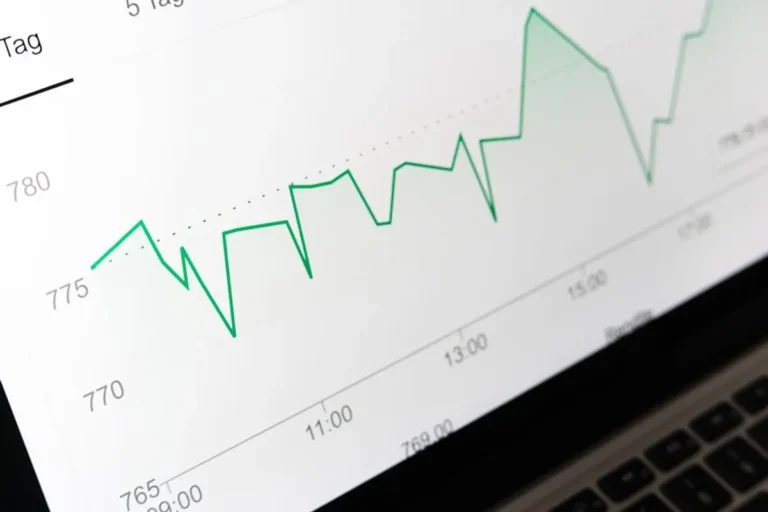
For any local business, visibility on Google Maps directly correlates with customer acquisition. Unlike traditional organic search, Google Maps results are inherently localized, dynamic, and often the first point of contact for potential customers seeking nearby services or products. Tracking these rankings is not a vanity metric; it is a critical diagnostic tool for local SEO professionals and business owners to understand their real-world discoverability, identify performance gaps, and directly influence foot traffic, phone calls, and online engagement. Neglecting Google Maps rank tracking means operating without a clear understanding of local market position, leaving revenue opportunities on the table. Tracking these rankings is not a vanity metric; it is a critical diagnostic tool for local SEO professionals and business owners to understand their real-world discoverability.
Understanding Google Maps Ranking Factors
Google Maps rankings are influenced by a distinct set of signals, primarily centered around the user's location and the business's relevance and authority. These factors are constantly evaluated by Google's algorithm to provide the most useful and localized results.
- Proximity: This is the most fundamental factor. Google assesses the physical distance between the searcher's location (or the location specified in the search query, e.g., "plumbers near [city]") and the business's address. Businesses closer to the searcher generally receive higher priority, assuming other factors are equal. This makes geo-specific tracking essential.
- Relevance: How well does the business's Google Business Profile (GBP) match the user's search query? This involves the accuracy and completeness of the business's category selections, services offered, business description, and keywords used within the profile. A profile accurately reflecting the services sought by the user will rank higher.
- Prominence: This refers to how well-known and established a business is, both online and offline. Prominence is derived from factors such as the business's organic search ranking (a well-ranked website often indicates prominence), the number and quality of online reviews, local citations (mentions of the business name, address, phone number across the web), and media coverage. Businesses with a strong overall online presence tend to perform better in Maps.
- Reviews: The quantity, quality, and recency of customer reviews on Google Business Profile significantly impact prominence and, by extension, ranking. Businesses with numerous positive, recent reviews are often favored, as they signal trustworthiness and customer satisfaction. Responding to reviews, both positive and negative, also plays a role in demonstrating engagement.
Why Google Maps Rank Tracking Differs from Organic Search
While both organic search and Google Maps aim to provide relevant results, their ranking mechanisms and tracking requirements diverge significantly due to their distinct user contexts. While both organic search and Google Maps aim to provide relevant results, their ranking mechanisms and tracking requirements diverge significantly due to their distinct user contexts, impacting both organic search and Google Maps ranking.
Geo-dependency and Personalization
Google Maps results are heavily geo-dependent. A search for "coffee shop" will yield different results for someone in downtown Seattle versus someone in suburban Boston, even at the same moment. Furthermore, results can be personalized based on a user's search history, device, and even time of day. This means a single "ranking" for a keyword is often insufficient; tracking needs to account for variations across multiple geographic points and potential user profiles.
Local Pack vs. Maps Interface
There's a critical distinction between the "Local Pack" (the 3-pack of businesses displayed directly within the main Google Search Results Page for local queries) and the full Google Maps interface. While related, a business might perform differently in each. The Local Pack is highly competitive and offers immediate visibility on the SERP, driving significant clicks. The full Maps interface allows for more exploration and filtering. Effective tracking considers performance in both contexts.
Key Metrics for Google Maps Performance
Beyond simple ranking positions, a comprehensive understanding of Google Maps performance requires monitoring several key metrics that directly reflect user engagement and business impact.
- Visibility and Discovery:
- Search Views: How many times your business profile appeared in Google Search results.
- Maps Views: How many times your business profile appeared in Google Maps results.
- Direct Searches: Users who searched directly for your business name or address.
- Discovery Searches: Users who searched for a category, product, or service that your business offers, leading to your profile's appearance. These are crucial for new customer acquisition.
- Branded Searches: Users who searched for your brand name or a brand associated with your business.
- User Actions and Engagement:
- Website Clicks: How many users clicked through to your website from your GBP.
- Direction Requests: How many users requested directions to your physical location.
- Phone Calls: How many users called your business directly from your GBP.
- Message Clicks: How many users initiated a message conversation with your business.
- Photo Views: How many times photos of your business were viewed compared to competitors.
Pro Tip: Focus on tracking "Discovery Searches" as a primary indicator of new customer reach. While direct and branded searches show existing customer engagement, an increase in discovery searches often signals successful local SEO efforts for broader visibility.
Methodologies for Tracking Google Maps Rankings
Tracking Google Maps rankings effectively requires a blend of manual checks and automated solutions to account for the dynamic, location-dependent nature of the results.
Manual Spot Checks
For ad-hoc verification or understanding hyper-local nuances, manual checks can be useful. This involves:
- Using a private or incognito browser window to avoid personalization.
- Searching from different physical locations (e.g., using a mobile device at varying distances from the business).
- Employing VPNs or proxy services to simulate searches from specific geographic coordinates.
While informative for individual queries, manual checks are not scalable or reliable for comprehensive, consistent tracking due to the sheer volume of potential locations and queries, and the difficulty in maintaining consistent search parameters.
Automated Tracking Solutions
Dedicated local rank tracking platforms provide the necessary scale and accuracy for Google Maps. These solutions typically:
- Simulate searches from hundreds or thousands of specific geographic points (often on a grid pattern around a business location).
- Track rankings for selected keywords within both the Local Pack and the broader Maps interface.
- Monitor competitor rankings within the same geographic areas and for the same keywords.
- Provide historical data, allowing for trend analysis and performance comparisons over time.
- Integrate with Google Business Profile to pull additional insights.
These tools automate the data collection process, offering a consistent, measurable view of local search performance across a defined service area.
Monitoring Google Business Profile Insights
Google Business Profile (GBP) itself offers valuable first-party data. The "Insights" section provides aggregated data on how customers find your business, where they come from, and what actions they take. While not a "rank tracker" in the traditional sense, it complements rank tracking by providing high-level performance metrics and trends directly from Google.
Leveraging Rank Tracking Data for Local SEO Strategy
The true value of Google Maps rank tracking lies in its ability to inform and refine your local SEO strategy, leading to tangible business improvements.
Identifying Performance Gaps
Consistent tracking reveals where your business is underperforming. For example, if you rank well for "dentist" in your immediate vicinity but drop significantly a few miles away, it signals a need to enhance prominence or relevance for those outer-lying areas. Similarly, if you rank for broad terms but not specific services, it indicates a need for more detailed GBP optimization.
Optimizing for Local Intent
Rank tracking data can highlight the specific keywords and geographic areas where your target audience is searching. This insight allows you to fine-tune your Google Business Profile categories, services list, business description, and even website content to better align with local search intent. For instance, if data shows strong search volume for "vegan restaurants near me" and your business offers vegan options, ensuring "vegan restaurant" is a primary category or service in your GBP becomes critical.
Competitor Analysis within Maps
Monitoring competitor rankings within the same local grid provides a direct comparison of local search performance. If a competitor consistently outranks you in key areas, analyze their GBP for clues: more reviews, better review sentiment, more complete information, or specific categories they've selected. This competitive intelligence can guide your own optimization efforts.
Actionable Insights from Google Maps Data
Consistent Google Maps rank tracking transforms raw data into a strategic advantage. By regularly reviewing your performance across relevant keywords and geographic points, you gain the clarity needed to make informed decisions. This iterative process of tracking, analyzing, and optimizing your Google Business Profile and broader local SEO signals directly impacts your local visibility. Prioritize addressing identified ranking gaps, refine your GBP based on top-performing search queries, and actively manage your online reputation through reviews. Ultimately, a proactive approach to Google Maps rank tracking ensures your business remains discoverable and competitive in the local market, driving valuable customer interactions and sustained growth.
Frequently Asked Questions
How often should I track Google Maps rankings?
For most local businesses, weekly or bi-weekly tracking is sufficient to observe trends and identify significant changes. Daily tracking might be necessary for highly competitive niches or during active optimization campaigns to quickly assess the impact of changes.
What's the difference between local pack and map results?
The local pack is the prominent block of 3-4 business listings that appears directly on the main Google Search Results Page (SERP) for local queries. Map results refer to the broader list of businesses displayed when a user clicks on the "More places" link or navigates directly to Google Maps, offering a more extensive, interactive view.
Can I influence my Google Maps ranking directly?
Yes, you can significantly influence your Google Maps ranking. Key actions include optimizing your Google Business Profile with accurate and complete information, actively soliciting and responding to customer reviews, ensuring consistent NAP (Name, Address, Phone) citations across the web, and maintaining a strong overall online presence.
Why do my Google Maps rankings fluctuate so much?
Google Maps rankings are highly dynamic due to several factors: the searcher's exact location, real-time algorithm updates, changes in competitor activity, and the recency of reviews. These fluctuations are normal, but consistent tracking helps distinguish minor shifts from significant performance changes that require strategic intervention.